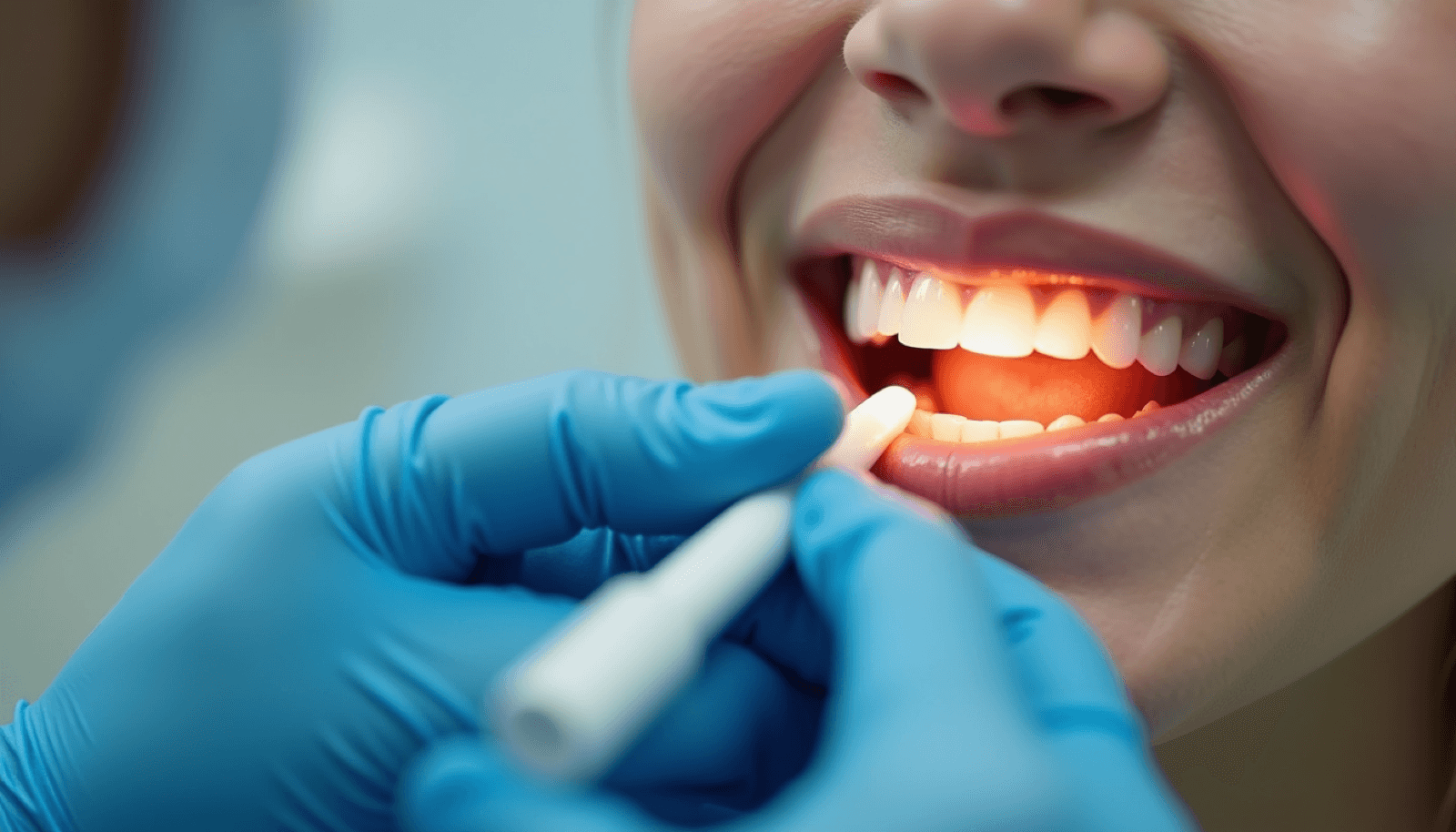
A bright, white smile can boost confidence and leave a lasting impression. Many people turn to over-the-counter (OTC) teeth whitening kits hoping for quick and affordable results. Yet, these products often fail to deliver the dramatic improvements promised. Professional teeth whitening, performed by dental experts, offers a safer and more effective solution. This guide explains why in-office whitening outperforms drugstore strips and how to maintain your dazzling smile after treatment.
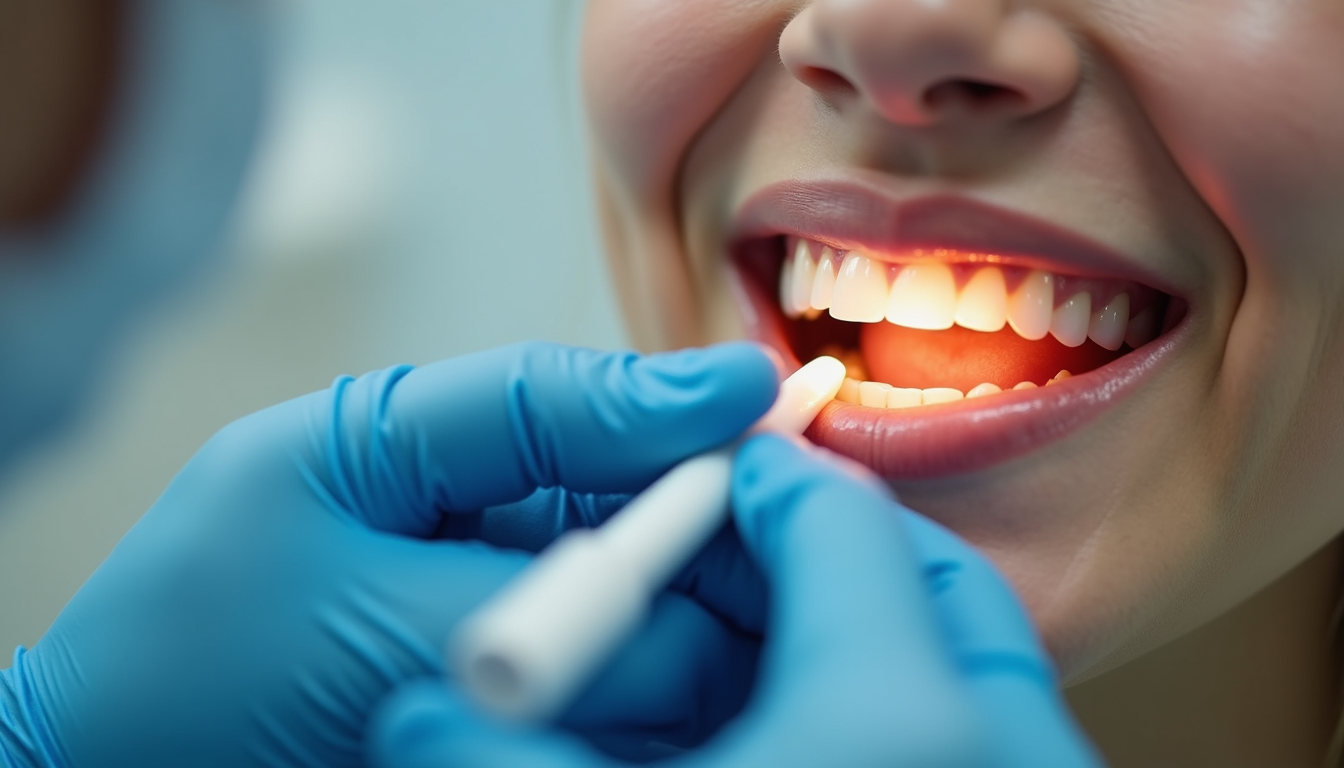
Professional teeth whitening treatment in progress
Why Over-the-Counter Whitening Kits Often Disappoint
OTC whitening kits, including strips, gels, and trays, are popular because they are easy to buy and use at home. However, their limitations become clear when compared to professional treatments.
- Lower Concentration of Whitening Agents
OTC products contain a much lower percentage of bleaching agents like hydrogen peroxide or carbamide peroxide. This means they work slower and often produce less noticeable results.
- Uneven Application
Strips and generic trays do not fit every mouth perfectly. This can cause uneven whitening, leaving some teeth brighter than others or missing spots entirely.
- Shorter Treatment Duration
Many OTC kits require daily use for weeks, but the shorter exposure time and weaker formulas limit their effectiveness.
- Potential for Tooth Sensitivity and Gum Irritation
Without professional guidance, users may apply products incorrectly or too frequently, increasing the risk of sensitivity or gum damage.
- Limited Ability to Address Deep Stains
Surface stains from coffee or smoking may respond somewhat to OTC kits, but deeper discoloration often remains unaffected.
How Professional Teeth Whitening Works
Professional whitening treatments are performed by dentists or trained hygienists who customize the process for each patient. This tailored approach leads to better, safer results.
- Stronger Whitening Agents
In-office treatments use higher concentrations of bleaching agents, sometimes up to 40% hydrogen peroxide, which can whiten teeth several shades in a single session.
- Custom-Fitted Trays or Direct Application
Dentists create molds of your teeth to design trays that fit perfectly, ensuring even coverage. Alternatively, whitening gel may be applied directly to teeth with protective barriers for gums.
- Controlled Environment
Dental professionals monitor the treatment closely, adjusting exposure times and protecting sensitive areas to minimize discomfort.
- Advanced Techniques
Some offices use light or laser activation to accelerate the whitening process and enhance results.
- Comprehensive Assessment
Before treatment, dentists evaluate oral health to identify issues like cavities or gum disease that could affect whitening safety.
Safety Benefits of Professional Whitening
Safety is a major advantage of professional whitening over OTC kits. Dentists ensure treatments are appropriate for your teeth and gums, reducing risks.
- Reduced Risk of Overuse
Professionals control the amount and duration of whitening agents, preventing damage from excessive exposure.
- Protection of Soft Tissues
Gums and other soft tissues are shielded during treatment to avoid irritation or burns.
- Management of Sensitivity
If sensitivity occurs, dentists can recommend desensitizing agents or adjust treatment plans.
- Addressing Underlying Dental Issues
Whitening is postponed or modified if dental problems are present, avoiding complications.
Maintaining Your Whitening Results
Professional whitening can brighten your smile dramatically, but maintaining those results requires care.
- Practice Good Oral Hygiene
Brush twice daily with fluoride toothpaste and floss regularly to prevent plaque buildup and staining.
- Avoid Stain-Causing Foods and Drinks
Limit consumption of coffee, tea, red wine, and dark berries. If you do indulge, rinse your mouth or brush soon after.
- Quit Smoking
Tobacco products cause stubborn stains and reduce overall oral health.
- Use Whitening Toothpaste
These can help maintain brightness by gently removing surface stains.
- Schedule Touch-Up Treatments
Depending on your habits, professional touch-ups every 6 to 12 months can keep your smile vibrant.
- Stay Hydrated
Drinking water helps wash away food particles and acids that cause discoloration.
When to Choose Professional Whitening
Consider professional whitening if you want:
OTC kits may be suitable for mild surface stains or as a maintenance option after professional treatment, but they rarely match the power and precision of in-office procedures.
Ready for Your Next Visit?
We’d Love to See You
Questions about anything you read here? Book a visit and Dr. Kim will walk you through it in plain English.
Request a Visit